When sourcing birch plywood, buyers may encounter different product descriptions, including 100% Birch Plywood, Full Birch Plywood and Birch-Faced Plywood.
Although these products may have a similar surface appearance, their internal constructions can differ.
Understanding the construction of plywood is an important part of the purchasing process. It helps importers, distributors, wholesalers and industrial users communicate their requirements clearly, compare product specifications and select suitable materials for their intended applications.
This article explains the differences between 100% Birch Plywood and Birch-Faced Plywood from a neutral manufacturing and purchasing perspective.
1. What Is 100% Birch Plywood?
100% Birch Plywood, also commonly referred to as Full Birch Plywood, is constructed using birch veneers throughout the panel.
In this construction, the face, back and internal core layers are made from birch veneer.
The number of veneer layers and the thickness of individual veneers depend on the overall panel thickness and the manufacturer’s construction specification.
For buyers who require an all-birch construction, it is important to confirm that birch is used throughout the panel rather than only on the visible surfaces.
The product description should therefore be supported by a clear written construction specification.
2. What Is Birch-Faced Plywood?
Birch-Faced Plywood generally describes plywood with birch veneer on the visible face and/or back surfaces.
The internal core may use other wood species, depending on the manufacturer’s product design and the agreed specification.
For example, some products may combine birch face veneers with eucalyptus, poplar or other suitable core materials.
Different plywood constructions are developed to meet different technical, manufacturing and commercial requirements.
Birch-Faced Plywood is therefore a separate product construction category, not necessarily an indication of lower quality.
The appropriate choice depends on the intended application, required properties, product specification and purchasing priorities.
3. Understanding the Main Construction Differences
The following table summarizes common construction characteristics.
| Purchasing factor | 100% Birch Plywood | Birch-Faced Plywood |
|---|---|---|
| Face veneer | Birch | Birch |
| Back veneer | Birch | Birch, subject to specification |
| Core veneer | Birch | May include other wood species |
| Internal construction | Birch veneers throughout | Depends on the specified core material |
| Main purchasing consideration | Confirmation of all-birch construction | Confirmation of face, back and core materials |
| Product documentation | Construction and material specifications | Construction and material specifications |
These are general commercial descriptions. Actual panel construction should always be confirmed through the manufacturer’s technical documentation and agreed product specification.
4. Why Is It Important to Understand the Core Material?
The core is an integral part of plywood construction.
When comparing products from different manufacturers, buyers should understand not only the surface veneer but also the materials used inside the panel.
The following details can help establish a clear purchasing specification.
Wood species
Confirm the wood species used for the face, back and core veneers.
Veneer arrangement
Ask the manufacturer to provide the panel construction, including the number and arrangement of veneer layers where available.
Panel thickness
Specify the nominal thickness and acceptable thickness tolerance. The measurement method should also be agreed.
Bonding requirements
Confirm the adhesive system and the bonding requirements relevant to the intended application.
Moisture content
Discuss the required moisture content range and the inspection method used to measure it.
Surface grade
Define the required face and back grades, including acceptable limits for knots, patches, splits and other visible characteristics.
Dimensional requirements
Confirm panel length, width, dimensional tolerances and any special requirements concerning squareness or thickness consistency.
A clear specification makes it easier for both buyers and manufacturers to understand the product being discussed.
5. Can Plywood Construction Be Identified by Looking at the Panel Edge?
The exposed edge of a plywood panel can provide useful preliminary information.
Buyers may observe the veneer layers, their arrangement and visible differences in colour or grain.
However, visual inspection alone cannot conclusively establish the wood species of every internal layer.
For more reliable product identification, buyers may consider several complementary methods:
- Requesting a written construction specification from the manufacturer.
- Reviewing available raw-material and veneer sourcing records.
- Checking production and batch traceability information where available.
- Arranging independent inspection or suitable wood-species verification when required.
The appropriate verification method depends on the purchasing requirements and the level of assurance needed.
6. How Should Buyers Select the Appropriate Plywood Construction?
There is no single plywood construction suitable for every application.
The selection should be based on the intended use, technical requirements, manufacturing process and agreed purchasing specification.
Before requesting quotations, buyers may wish to clarify the following points:
- Does the project require birch veneers throughout the panel, or is a birch-faced construction acceptable?
- Which face and back grades are required?
- What thicknesses and panel dimensions are needed?
- What bonding and performance requirements apply?
- Are there specific moisture content or dimensional tolerance requirements?
- Which technical documents, test reports or compliance documents are required?
- What inspection and quality-control arrangements should be agreed?
Providing this information at the quotation stage can reduce misunderstandings and help manufacturers evaluate the requirements more accurately.
7. 100% Birch Plywood Trial Production in Latvia
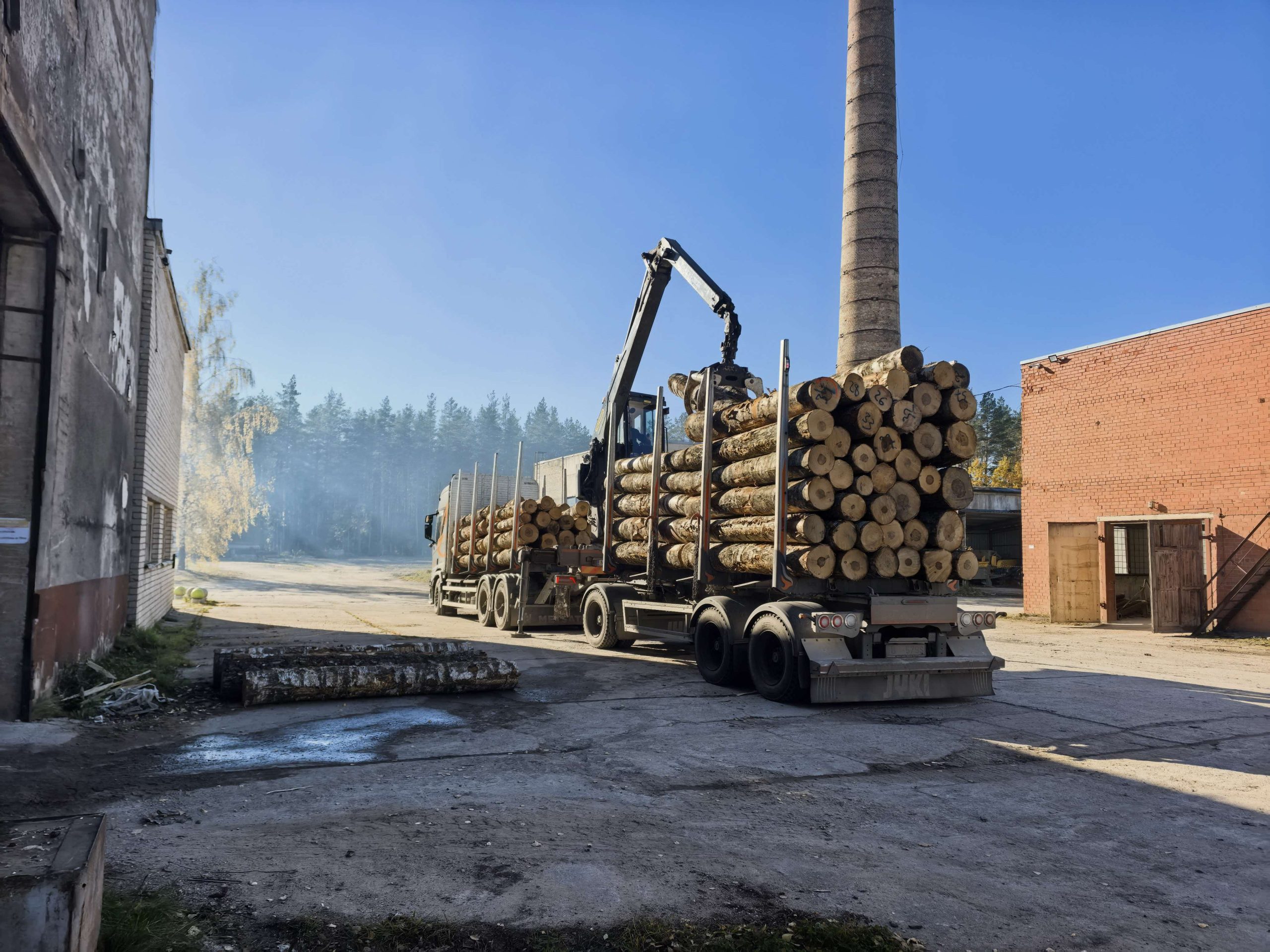
SIA 58Northwood is a plywood manufacturing factory located in Latvia, focusing on 100% Birch Plywood.
The factory has entered the trial production stage and is using selected large-diameter birch logs for birch veneer production.
The current product development and production focus includes the following commercial grades:
- B/BB
- BB/BB
- BB/CP
- CP/CP
Current dimensional focus:
- 2500 × 1250 mm
- 2440 × 1220 mm
Both dimensions are currently focused on Long Grain panel formats.
The grade combinations and dimensions above describe the factory’s current production focus. Actual product availability, thicknesses, tolerances and quality characteristics should be confirmed against trial-production samples and mutually agreed specifications.
For potential buyers, reviewing physical samples and discussing the required panel construction directly with the manufacturer can be useful steps when evaluating a new manufacturing source.
8. Manufacturing Process and Factory Evaluation
When evaluating a plywood manufacturer, buyers may wish to understand the production process and the quality-control arrangements at each stage.
For birch plywood manufacturing, the process may include:
- Birch log selection.
- Rotary peeling to produce veneer.
- Veneer drying and preparation.
- Veneer grading and sorting.
- Glue application and panel lay-up.
- Hot pressing.
- Panel trimming and sanding.
- Finished-product inspection and packing.
The actual production arrangements and operating status should be confirmed during a factory visit or through relevant manufacturing records.
For buyers considering a new supplier, a factory visit can provide an opportunity to discuss raw materials, production equipment, product specifications, inspection procedures and future cooperation requirements.
9. European Documentation, Testing and Regulatory Considerations
When purchasing plywood for the European market, buyers and manufacturers should identify the regulatory and technical requirements applicable to the specific product and its intended use.
Formaldehyde emissions
Formaldehyde emissions may be relevant to the intended use and market requirements of plywood products.
Buyers should identify the applicable emission requirements and confirm whether suitable test reports are available for the specific product.
Bonding and other technical testing
Depending on the intended application, buyers may also need to review bonding performance, mechanical properties, durability-related requirements or other technical test results.
The applicable testing methods and acceptance criteria should be agreed according to the relevant product specification and intended use.
Current Certification and Testing Status at 58Northwood
58Northwood is currently applying for relevant certificates and arranging product testing.
Once official results, certificates or relevant notifications are received, customers will be informed accordingly.
The status of each certificate, application and test should be confirmed individually. No pending application or planned test should be interpreted as an issued certificate or completed compliance assessment.
10. Factory Visits and Buyer Discussions
European importers, distributors, wholesalers and industrial plywood users are welcome to arrange a factory visit in Latvia by prior appointment.
A visit provides an opportunity to discuss:
- Birch log selection and veneer production.
- Full-birch panel construction.
- Product grades and reference samples.
- Current dimensions and thickness requirements.
- Manufacturing and quality-control arrangements.
- Technical documentation and testing requirements.
- Potential cooperation and future product development.
Direct discussions can help both parties determine whether the product specifications and manufacturing arrangements meet their purchasing requirements.
Conclusion
The main difference between 100% Birch Plywood and Birch-Faced Plywood lies in their internal veneer construction.
100% Birch Plywood uses birch veneers throughout the panel, while Birch-Faced Plywood generally uses birch on the visible surfaces with a core construction that depends on the manufacturer’s specification.
Both constructions serve different purchasing and application requirements.
For professional buyers, the most important steps are to confirm the wood species, internal construction, grades, dimensions, technical requirements and relevant documentation before placing an order.
SIA 58Northwood welcomes discussions with European buyers interested in 100% Birch Plywood manufactured in Latvia.
Contact Information
SIA 58Northwood
Latvia
Website: https://58northplywood.com/
Email: amy@58northplywood.com
Factory visits are welcome by prior appointment.
Start Your First Trial Order with 58Northwood
Looking for a reliable source of 100% Birch Plywood from Latvia?
SIA 58Northwood welcomes enquiries from plywood importers, distributors and industrial buyers interested in evaluating our products.
We invite potential buyers to discuss:
- Required plywood thickness and dimensions.
- BB/BB, B/BB or BB/CP surface grades.
- Face and core veneer construction.
- Product samples and quality requirements.
- Trial order quantities and packaging specifications.
- Inspection and shipment arrangements.
Whether you are evaluating a new European plywood supplier or planning your 2027 purchasing programme, our sales team is ready to discuss your requirements.
Contact our sales team:
REQUEST A TRIAL ORDER QUOTATION
SIA 58Northwood | Latvia